
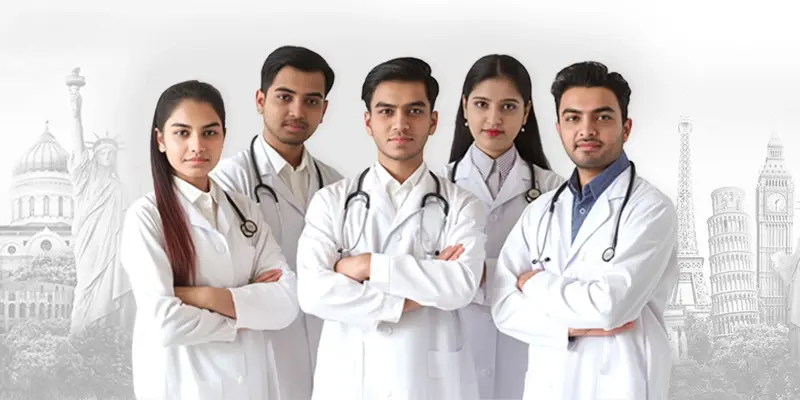
For thousands of Indian students, becoming a doctor is a dream they have carried since school. But getting an MBBS seat in India can be challenging because of intense competition, limited seats and, in some private institutions, a high overall cost of education.
This is one reason why MBBS abroad for Indian students has become an option worth exploring. Countries such as Russia, Georgia, Kazakhstan, Italy and several European destinations offer medical education opportunities for international students.
However, choosing a foreign medical university should never be based only on low fees or attractive advertisements. Students need to understand university recognition, course duration, medium of instruction, clinical exposure, eligibility rules and the requirements for returning to practise medicine in India.
Here is a practical guide to help students and parents understand the process before making a decision.
Why Are Indian Students Considering MBBS Abroad?
The biggest attraction of studying medicine abroad is the availability of more options. In India, a large number of students compete through NEET for a comparatively limited number of medical seats.
Studying overseas can expand the number of universities and destinations a student can consider.
Another important factor is cost. Depending on the country and university selected, some international medical programs can be more affordable than certain private medical education options in India.
Students may also get access to modern campuses, laboratories, teaching hospitals and multicultural learning environments.
However, affordability alone should not determine your choice. The quality and structure of the medical program are far more important for a student’s long-term career.
Popular Countries for MBBS Abroad
Indian students today have several destinations to explore. Each country comes with different tuition fees, living expenses, admission procedures and medical education systems.
Russia
Russia has remained a popular medical education destination among Indian students. Several universities offer programs for international students, and the overall cost can be comparatively manageable.
Before applying, students should carefully verify the medium of instruction, clinical training structure and whether the program fulfils the requirements applicable to Indian students.
Georgia
Georgia has also attracted Indian medical aspirants because of its international student environment and availability of English-taught medical programs at various universities.
Students should still compare universities individually instead of assuming that every medical institution in a country offers the same quality or eligibility pathway.
Kazakhstan
Kazakhstan is often considered by students looking for relatively budget-friendly medical education overseas.
While comparing universities, students should look beyond tuition fees and examine hospital exposure, internship arrangements, course duration and local language requirements during clinical training.
Italy
Italy can be an interesting choice for students looking for medical education in Europe. Some universities offer English-taught medical programs, while admission to certain programs may involve the IMAT or another applicable selection process.
Students should check the latest university-specific admission requirements before applying.
Eligibility for MBBS Abroad
Eligibility requirements can vary according to the university and country. Indian students should also consider the regulations that apply if they eventually want to practise medicine in India.
In general, applicants may need to meet requirements related to:
- Minimum age criteria
- Class 12 qualification with Physics, Chemistry and Biology
- Required PCB percentage
- NEET qualification where applicable
- Valid passport
- Medical fitness requirements
- University-specific admission conditions
Students should verify the latest requirements directly from official authorities and the university before paying any admission or processing fee.
Is NEET Required for MBBS Abroad?
This is one of the most common questions among Indian students.
Students planning to pursue an undergraduate medical qualification abroad and later practise medicine in India need to pay close attention to India’s applicable medical education and licensing regulations.
Therefore, students should not treat NEET qualification or regulatory compliance as a minor admission formality.
Before taking admission, check the latest rules issued by the relevant Indian authorities because medical education and licensing regulations can change over time.
Choosing the Right Medical University
Selecting a university is arguably the most important part of the entire process.
Do not choose a university simply because someone describes it as “cheap” or “easy admission.”
Start by investigating its official recognition and accreditation. Then understand the complete medical curriculum and the number of years required to complete the program.
Students should also ask about clinical rotations and practical hospital exposure.
The language used during classroom teaching and clinical interaction is equally important. Even when the academic program is advertised as English-medium, students may need to learn the local language to communicate with patients during clinical training.
Other factors worth checking include hostel facilities, student safety, living expenses, climate, Indian student community and travel connectivity.
Understanding the Real Cost of MBBS Abroad
When families calculate their MBBS abroad budget, they sometimes consider only tuition fees. This can create financial problems later.
Your actual budget may include:
Tuition fees: The amount charged by the university each year.
Hostel or accommodation: University hostels and private accommodation can have very different costs.
Food and living expenses: Grocery, transportation, utilities and personal expenses should be included.
Visa and documentation: Visa applications, document translation, notarisation, apostille or related processes may involve additional expenses.
Travel: Students generally need to account for international flights during their studies.
Medical insurance: Depending on the destination, health insurance may be mandatory.
Always ask for a realistic estimate of the total cost of completing the entire program, rather than looking only at the first-year fee.
Documents Commonly Required
The exact documentation differs between countries and universities, but students commonly need academic and identity documents.
These may include Class 10 and 12 marksheets, NEET scorecard, passport, photographs, birth certificate and medical fitness documents.
Some destinations or universities may request additional financial, police clearance, language or immigration-related documents.
Preparing documents early can make the application process much smoother.
Understand the Rules for Practising in India
This is one area students should research particularly carefully.
Completing a medical degree abroad does not automatically mean that a graduate can immediately begin practising medicine in India.
Foreign medical graduates need to satisfy the applicable eligibility, education, internship and licensing requirements prescribed by Indian authorities.
Students should therefore examine whether their proposed foreign medical program meets the applicable requirements before joining the university, rather than discovering a problem after several years of study.
Rules can evolve, so always rely on the latest official regulations.
Don’t Select a University Only on the Basis of Fees
A low-cost medical program may look attractive initially, but the cheapest option is not automatically the best option.
Ask practical questions.
Does the university provide sufficient clinical exposure? What hospitals are associated with it? What is the teaching language? Will students interact with patients? What is the course duration? What are the internship arrangements?
Also investigate the university’s academic environment and support available for international students.
The answers to these questions can matter much more than a small difference in tuition fees.
Plan Your MBBS Abroad Journey Carefully
Studying medicine abroad can open new opportunities, but it is a major academic and financial commitment.
Students and parents should compare multiple universities, understand the complete fee structure and verify recognition and regulatory requirements before making a final decision.
Avoid making an admission decision simply because seats appear limited or because someone promises guaranteed outcomes. Take time to examine official university information and applicable medical regulations.
With careful research and realistic planning, students can identify an overseas medical program that suits their academic goals, budget and future career plans.
The goal should not simply be to get an MBBS admission abroad. The goal should be to choose an education pathway that prepares you to become a competent medical professional.
Book your Free consultancy: 9350777177 / https://reliablestudy.com/
– Content Writer and SEO – Riya Singh
All right reserved – Reliable Study / https://reliablestudy.com/
FAQs
Yes, it can be a suitable option if the university, course structure, clinical training, budget and applicable Indian regulations are carefully verified.
Indian students should check the latest NEET and foreign medical graduate requirements applicable to their intended career pathway, particularly if they plan to practise in India.
Russia, Georgia, Kazakhstan and several European countries are commonly explored by Indian medical aspirants.
Eligibility to practise depends on whether the degree and medical education pathway satisfy the applicable Indian regulations and licensing requirements.
Check recognition, curriculum, course duration, clinical exposure, teaching language, internship structure, total cost and eligibility requirements.