
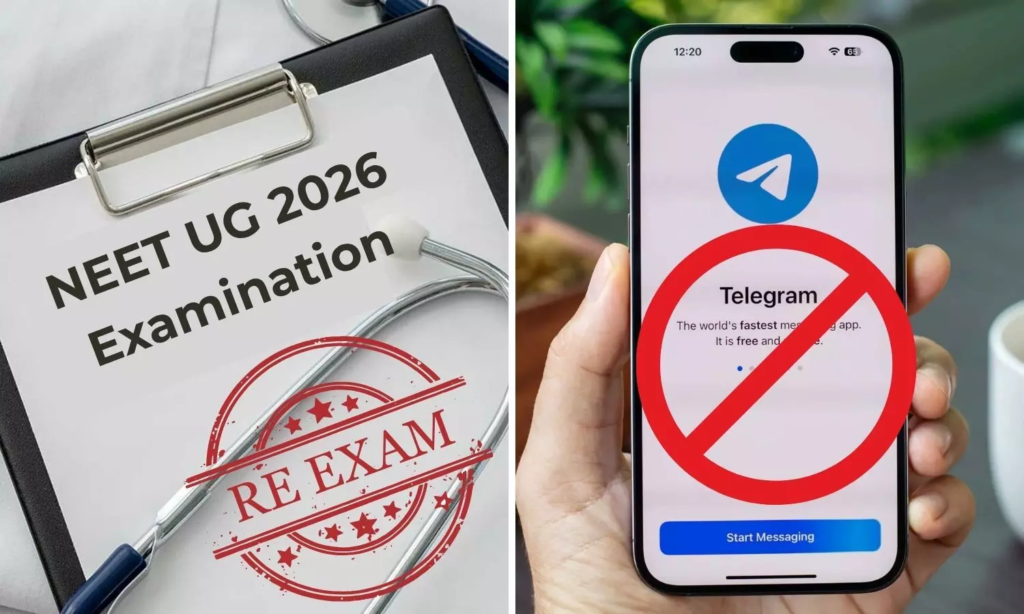
The Indian authorities have put a temporary ban on Telegram before the NEET-UG 2026 re-exam due to the fact that the messaging app was being abused in order to spread rumors about leaked question papers and other types of frauds regarding the exam. This measure has sparked a lot of controversy and debates within the student community, as well as amongst parents and specialists in education because the medical entrance exam is one of the toughest exams in India.
The ban was issued based on the suggestions made by the National Testing Agency (NTA), which reported some fraudulent actions carried out by certain communities on Telegram.
Why Was Telegram Restricted in India?
Telegram is among the most commonly used communication apps in India, particularly for the students owing to its group chats and educational channels and file-sharing facilities. The authorities have, however, come across the misuse of these features through which the users spread misleading information regarding the NEET exams.
As per the sources, there were several fake groups on the platform, making false claims regarding leaks of question papers and making money through offering access to these questions. These actions resulted in causing panic among the NEET candidates regarding their exam integrity.
The imposition of this ban was thus deemed appropriate by the government.
Role of NTA in Telegram Restriction
National Testing Agency (NTA), which organises NEET-UG exam, has asked to take some steps against the use of Telegram for spreading rumors. NTA informed that the organized cheating gangs were taking advantage of the digital platform for making fake claims.
It was appreciated by the NTA as it will ensure safe and fair examination environment for candidates participating in NEET-UG 2026 re-exam.
It is being recommended to the candidates that they should believe only in official information regarding examination and not on the rumors that are being circulated through social media platforms.
How Was Telegram Being Misused?
One key issue that came up according to reports from authorities is the misusing of the message editing facility on Telegram. Some groups would edit older messages in order to make the public believe that copies of the question papers had been released even before the examinations took place.
In order to defraud candidates, the fraudsters would make use of edited messages and falsified documents to deceive the students and their parents into believing that they have copies of the question papers.
The ban on Telegram will definitely help in curbing such campaigns.
Impact on NEET Students
The restriction that has been imposed temporarily on Telegram might create some impact on the students using it for education-related activities. Aspirants use various Telegram channels for accessing study material, discussions regarding their doubts, preparing notes, etc.
Students who have appeared or are preparing to appear for the NEET examination must not rely on any unofficial Telegram channels for important information related to the NEET examination. Only information from official websites of NTA is reliable.
Students who wish to pursue learning through any other means can do so.
Is Telegram Permanently Banned in India?
No, the ban is temporary. In fact, it has been confirmed by the authorities that the ban is particularly connected with the NEET-UG 2026 examination period.
The reason for such temporary restrictions is the prevention of any kind of misuse of the application during the examination period. Apart from the ban on access, there have been restrictions related to Telegram’s message editing option as well.
This is not the case where Telegram will be banned permanently from India.
Importance of Exam Security in Competitive Exams
The NEET is considered to be one of the most significant entrance tests held in India, with thousands of students participating each year. The spread of rumors, paper leaks, and any kind of cheating can cause immense trouble for honest candidates.
It is important to secure the exams due to the reason that students put in years of hard work before the medical entrance exams. Constant efforts are made in order to maintain student security.
Although digital media helps a lot with communications, it can easily be misused by people to spread rumors.
What Should NEET Aspirants Do Now?
Students appearing for NEET-UG 2026 re-exam should follow these steps:
- Check updates only from official NTA notifications.
- Avoid purchasing or trusting claims about leaked papers.
- Do not share unverified information on social media.
- Focus on preparation instead of online rumours.
- Use trusted educational resources for revision.
The NEET examination requires strong preparation and a calm mindset. Avoiding fake information can help students concentrate better on their final performance.
Conclusion
The ban imposed on Telegram for the NEET re-exam in India indicates the growing difficulty of managing the security of the examination process in the era of technology. Although such apps as Telegram offer much-needed information to help in studies, their mismanagement may lead to chaos and affect thousands of students.
The temporary ban will ensure that no fraud, faked papers leakage, or any other kind of misinformation is spread during the crucial period. It is essential that candidates refer only to official sources and pay attention to their studies.
As the use of technology becomes increasingly prevalent, digital responsibility will be vital for the future of Indian examinations.
Book your Free consultancy: 9350777177 / https://reliablestudy.com/
– Content Writer and SEO – Riya Singh
All right reserved – Reliable Study / https://reliablestudy.com/
FAQs
Telegram was restricted to prevent fake NEET paper leak claims and exam-related fraud activities.
The National Testing Agency (NTA) recommended action against misuse of Telegram.
No, the restriction is temporary and related to the NEET re-examination period.
Students should follow official NTA sources for accurate NEET updates.
Some groups allegedly misused Telegram features to spread fake exam leak information.