
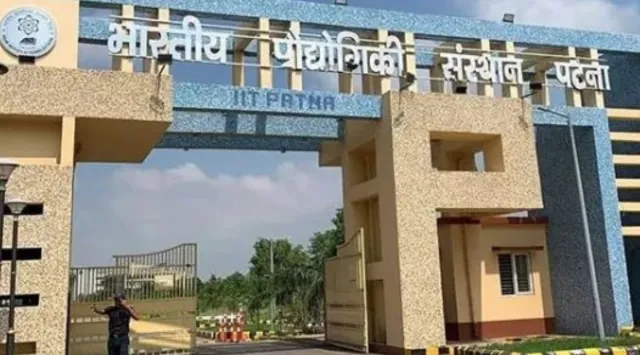
The Indian Institutes of Technology (IITs) have always been known for academic excellence, innovation, and producing some of the brightest minds in the country. However, in recent years, one IIT has quietly achieved a remarkable transformation that deserves attention. IIT Patna has significantly expanded its academic offerings, increasing the number of B.Tech programs from just 9 in 2020 to 32 in 2026. This extraordinary growth reflects not only the institute’s ambition but also the changing landscape of engineering education in India.
For students preparing for JEE Advanced and exploring engineering opportunities, this development opens the door to a wider range of specializations and career paths. It also demonstrates how modern engineering education is evolving to meet the demands of emerging technologies and industries.
From a Small Beginning to a Leading Institution
When IIT Patna started its journey in 2008, it offered only three B.Tech programmes and had just 92 students enrolled. Like many second-generation IITs, it began with limited infrastructure and resources. Over the years, however, the institute has steadily expanded its campus, academic departments, and research capabilities.
Today, IIT Patna has transformed into a thriving educational hub with thousands of students and a diverse range of academic programmes. The increase in B.Tech courses is perhaps the clearest indicator of this growth.
Why Has IIT Patna Expanded So Rapidly?
Several factors have contributed to IIT Patna’s impressive progress.
1. Growing Demand for Specialized Engineering Fields
The engineering industry is no longer limited to traditional branches such as Mechanical, Civil, and electrical engineering. Modern industries require professionals skilled in artificial intelligence, data science, robotics, cybersecurity, semiconductor technology, and other interdisciplinary fields.
Across India, IITs have started introducing new-age programmes to align with industry requirements and technological advancements. IIT Patna’s expansion reflects this larger trend in higher education.
2. National Education Policy (NEP) 2020
The implementation of the National Education Policy has encouraged institutions to adopt flexible and multidisciplinary learning approaches. IIT Patna is among the institutions actively embracing these reforms, offering students greater academic flexibility and diverse learning opportunities.
3. Infrastructure Development
Expanding academic programmes requires significant investments in infrastructure. Over the past few years, IIT Patna has focused on developing hostels, classrooms, laboratories, and other student facilities. This expansion has enabled the institute to accommodate more students and support additional programmes.
Student Strength Has More Than Doubled
Growth in academic programmes has been accompanied by a substantial increase in student enrollment. The institute had around 1,621 students in 2018, while the current student population has crossed 4,300. This growth demonstrates the increasing popularity and reputation of IIT Patna among engineering aspirants.
A larger student community also contributes to a richer campus experience, stronger peer learning opportunities, and more collaborative research projects.
Faculty Strength Continues to Rise
A quality educational institution cannot grow without investing in its faculty. IIT Patna has consistently strengthened its teaching and research workforce over the years.
The institute has witnessed significant growth in faculty numbers, ensuring that students receive quality education and mentorship. More faculty members also mean increased research output, better student-faculty interaction, and the ability to introduce specialized courses.
For students, this translates into access to experienced professors, advanced research opportunities, and improved academic support.
More Choices for Engineering Aspirants
One of the biggest advantages of this expansion is the increased number of choices available to students.
Earlier, engineering aspirants often had to choose from a limited set of branches. Today, they can explore interdisciplinary fields that combine engineering with data science, artificial intelligence, design, management, and emerging technologies.
This flexibility allows students to pursue careers that align more closely with their interests and future industry demands. It also helps graduates remain competitive in an increasingly technology-driven job market.
Industry-Relevant Education
Modern employers seek professionals who can solve complex problems across multiple domains. As technology evolves rapidly, educational institutions must update their curriculum accordingly.
The expansion of B.Tech programs at IIT Patna indicates a focus on creating industry-ready graduates. Students gain exposure to emerging technologies, research projects, internships, and practical learning experiences that prepare them for real-world challenges.
Such initiatives are becoming increasingly important as sectors like AI, machine learning, semiconductor manufacturing, healthcare technology, and advanced computing continue to grow.
Opportunities Beyond Engineering
Another interesting development is the growing emphasis on interdisciplinary learning. IIT Patna has introduced innovative academic pathways, including dual-degree collaborations and management-oriented opportunities that allow students to broaden their career options beyond traditional engineering roles.
This approach helps students develop leadership, analytical thinking, and business skills alongside technical expertise.
What This Means for Future Students
For students preparing for JEE Advanced, the rapid growth of IIT Patna is a positive sign. More programs mean more opportunities, greater academic flexibility, and access to specialized fields that may not have been available a few years ago.
As India continues to invest in technological innovation and advanced education, institutions like IIT Patna are playing a crucial role in shaping the next generation of engineers, researchers, entrepreneurs, and technology leaders.
Conclusion
The journey of IIT Patna from offering just 9 B.Tech programs in 2020 to 32 programs in 2026 highlights the institute’s remarkable transformation. Supported by infrastructure development, faculty expansion, NEP implementation, and a focus on emerging technologies, IIT Patna has emerged as one of the fastest-growing IITs in the country.
For aspiring engineers, this growth represents more than just an increase in course numbers—it signifies expanded opportunities, modern learning pathways, and a stronger foundation for future careers. As engineering education continues to evolve, IIT Patna is positioning itself as a key player in India’s academic and technological future.
Book your Free consultancy: 9350777177 / https://reliablestudy.com/
– Content Writer and SEO – Riya Singh
All right reserved – Reliable Study / https://reliablestudy.com/
FAQs
IIT Patna currently offers 32 B.Tech programmes, compared to 9 programmes in 2020.
The expansion is driven by industry demand, emerging technologies, infrastructure growth, and educational reforms under NEP 2020.
Yes, student enrollment has grown significantly, reaching over 4,300 students in recent years.
Students have access to more specialisations, better career options, interdisciplinary learning, and industry-relevant skills.
Yes, its rapid increase in programs, faculty, infrastructure, and student strength makes it one of the fastest-growing second-generation IITs.