
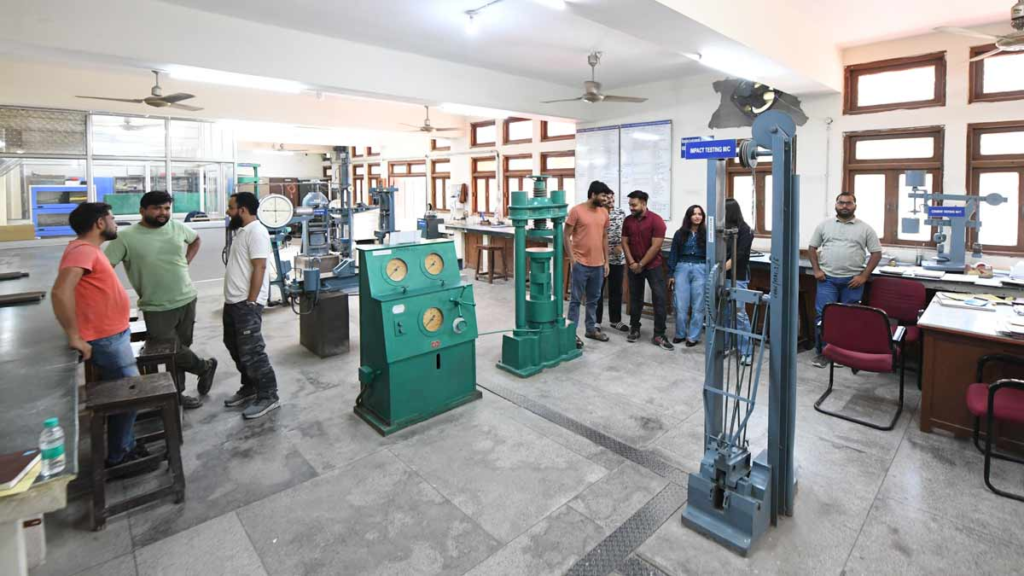
India has long been proud of its engineering talent, producing hundreds of thousands of graduates each year. But as we step deeper into the era of Industry 4.0—a technological revolution powered by artificial intelligence (AI), automation, robotics, data analytics, the Internet of Things (IoT), and smart systems—the real question isn’t how many engineers we produce, but whether they’re truly prepared for the fast‑changing world of work.
Industry 4.0 isn’t just a buzzword. It represents a fundamental shift in how industries operate, innovate, and compete globally. Traditional engineering roles that revolved around routine processes are being redefined. Today’s workplaces demand professionals who not only understand core technical concepts, but who can also adapt, think critically, solve complex problems, and collaborate across disciplines.
This presents both a tremendous opportunity and a major challenge for India. Many graduates struggle to bridge the gap between academic learning and real‑world expectations, highlighting a growing concern about employability and industry readiness.
🎯 The Skill Gap: India’s Biggest Hurdle
For decades, India has celebrated its engineering output. Nearly a million engineers step into the workforce each year. But impressive numbers on paper mask a deeper issue: a skills mismatch.
According to multiple studies, a large percentage of engineering graduates are not fully equipped for the demands of Industry 4.0. Research suggests that only about 40–50 per cent of engineering graduates are truly employable in modern industries. This gap stems partly from outdated curriculum structures that emphasize theoretical knowledge over practical, industry‑aligned skills.
While engineering education has traditionally focused on core subjects like mathematics, physics, and fundamental engineering principles, emerging technologies such as AI, machine learning, data analytics, cloud computing, and cybersecurity have not been uniformly integrated into academic programs. Many colleges still rely on older syllabi, leaving graduates underprepared for contemporary workplaces.
💡 Industry 4.0: More Than Just Technology
Industry 4.0 isn’t just about machines or automation—it’s about integrated systems and data‑driven decision‑making. At its core, it merges physical manufacturing with digital technologies like data analytics, IoT connectivity, AI‑based automation, and smart systems optimization.
This transformation means that modern engineering roles are no longer confined to single disciplines. Employers today seek professionals who can work at the intersection of technology and business, translating innovative ideas into impactful solutions. Engineers must understand not only how a system works, but how it interacts with broader processes and data flows.
In this context, skills such as systems thinking, workflow integration, digital collaboration, and adaptability are becoming just as important as technical expertise.
🛠 Practical Skills vs. Academic Knowledge
A common complaint from employers is that many graduates lack hands‑on experience. Classroom lectures and written exams can explain theory, but solving real industry problems requires familiarity with tools, methodologies, and practical applications.
For example, graduates may know the basics of programming or machine design—but when it comes to applying them to real‑world scenarios, work on live projects, or adapt to changing requirements, they may struggle. This reinforces the growing demand for what recruiters call “job‑ready skills”—the ability to hit the ground running on day one.
Tools such as coding platforms, simulation environments, digital twins, AI modeling frameworks, and collaborative software are now parts of modern engineering workflows. Yet too many students graduate without significant exposure to these tools, simply because academic programs have not fully caught up with industrial practices.
📚 The Need for Curriculum Reform
A key issue lies in how engineering is taught in India. While academic institutions have historically produced large numbers of graduates, many still focus on rote learning and examinations rather than fostering critical thinking and innovation.
To prepare students for Industry 4.0, education must transform from teaching static content to promoting dynamic learning—where students learn by doing. This requires:
- Updated curricula that incorporate emerging technologies
- Project‑based learning and real industry simulations
- Internships and apprenticeships with companies
- Hands‑on labs and workshops that mirror workplace environments
These approaches help students not only understand concepts, but also apply them with confidence.
The shift toward outcome‑based education—where learning objectives are centered around real‑world competencies—will be essential in closing the gap between academic knowledge and industry needs.
🤝 Academia‑Industry Collaboration Is Key
Bridging the skills gap requires more than curriculum tweaks—it demands strong partnerships between colleges and industry.
Collaborations can benefit both sides. Companies can help design courses that reflect actual workplace needs, and colleges can give students access to updated tools, technologies, and mentorship. Internships, live projects, and industry joint programs help students experience real work scenarios, build confidence, and develop networks before graduation.
Such partnerships also keep academic institutions informed about emerging industry trends, allowing them to adjust teaching methodologies faster than traditional academic review cycles.
🧠 Lifelong Learning: The Future of Employability
Industry 4.0 isn’t static. Technologies evolve rapidly, and so must engineers. Graduates today must embrace continuous learning, even after they enter the workforce.
This means pursuing micro‑credentials, specialized certifications, and short courses that add new skills throughout a career. Lifelong learning transforms engineers from job seekers into adaptable professionals who can evolve with technology and stay relevant in dynamic work environments.
Soft skills are also becoming essential. Critical thinking, collaborative teamwork, communication, emotional intelligence, and cultural awareness are no longer optional—they’re core competencies in global workplaces where people must work across teams and borders.
📉 The Reality Check
Despite the enormous talent pool, Indian engineering graduates face a stark reality: many are not ready for the demands of modern industry. Reports and employer surveys suggest that only a fraction of graduates have the practical skills and adaptability needed to thrive in a rapidly digitalizing economy.
This isn’t a failure of students alone. It reflects a broader ecosystem challenge that involves curriculum design, teaching approaches, industry involvement, and institutional agility. It also highlights a shift in mindset—from valuing degrees to valuing capabilities, outcomes, and impact.
🚀 A Roadmap for Change
Preparing graduates for Industry 4.0 requires collective effort:
1. Modernize Curriculum:
Ensure updated courses, interdisciplinary learning, and exposure to technologies like AI, IoT, data analytics, and automation.
2. Practical Learning:
Increase labs, live projects, internships, industry case studies, and skills assessments.
3. Strengthen Faculty:
Invest in faculty development so educators can teach emerging technologies with confidence.
4. Build Industry Ties:
Formalize partnerships for mentorship, training programs, guest lectures, and collaborative research.
5. Embrace Lifelong Learning:
Encourage continuous skill building, upskilling, and reskilling long after graduation.
🌟 Final Thoughts
India’s engineering talent remains one of its greatest assets. But to truly lead in the age of Industry 4.0, skill readiness must match numerical strength. Producing a large number of graduates is only part of the story. What matters most is equipping them with the tools, mindsets, and adaptability to shape the future.
The journey ahead may be challenging, but with the right reforms, collaborations, and learning culture, India’s engineers can not only be ready for Industry 4.0—they can drive it forward.