
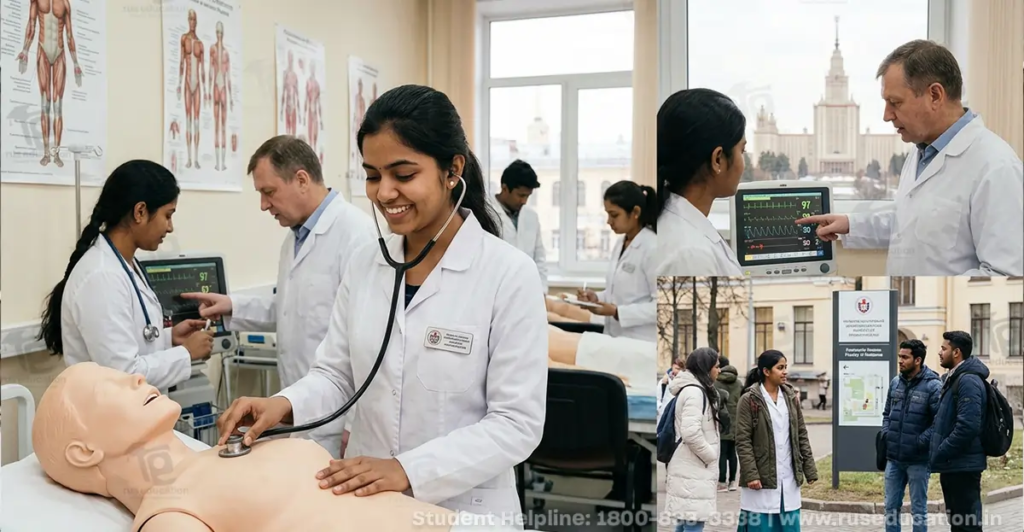
For many Indian students, becoming a doctor is a dream they have carried for years. They prepare for NEET, spend months studying Physics, chemistry and Biology, and hope to secure a medical seat that fits both their career goals and family budget.
But getting an MBBS seat in India can be extremely competitive. When students do not get the desired seat despite qualifying NEET, studying medicine abroad becomes an option worth exploring.
Among the international destinations considered by Indian medical aspirants, Russia has attracted attention because of its medical universities, established academic environment and opportunities for international students.
If you are considering an MBBS in Russia 2026, it is important to look beyond advertisements and understand the complete picture before making a decision.
Why Are Indian Students Considering MBBS in Russia?
The biggest reason is simple: students want an alternative when securing their preferred medical seat in India becomes difficult.
Russia has a long academic tradition in medical education, with universities offering medical programmes to international students. Indian students can also find programmes where medical education is available in English, although learning the local language can still be useful for everyday communication and clinical interaction.
Another factor is the overall cost. Depending on the university and other personal expenses, studying medicine in Russia can be more affordable than many private medical options in India.
However, affordability should never be the only deciding factor.
A medical degree is a long-term investment. Students should carefully check the university, course structure, eligibility requirements, clinical exposure, accommodation, total expenses and applicable regulations before taking admission.
MBBS in Russia 2026: What Should Students Know?
The first step is understanding the basic eligibility requirements.
Indian students generally need to qualify for NEET if they intend to pursue medical education abroad and later seek registration to practise medicine in India. Academic requirements related to physics, chemistry and biology also need to be checked carefully according to the applicable rules for the admission year.
Students should also make sure that they meet the age requirement and have the necessary academic documents before starting the admission process.
Because regulations can change, students should always verify the latest requirements applicable to their admission year rather than relying on information from an old brochure or social media post.
Understanding the Cost of MBBS in Russia
One of the major questions parents ask is, ‘How much does MBBS in Russia cost?’
There is no single fee applicable to every university.
The total expenditure can include the following:
- Tuition fees
- Hostel or accommodation charges
- Food and daily expenses
- Visa-related expenses
- Travel costs
- Medical insurance
- University-related charges
- Personal expenses
The tuition fee can vary significantly from one university to another. Therefore, comparing only the advertised tuition fee may not give you the actual cost of completing the degree.
A better approach is to calculate the estimated expenditure for the entire course.
Students and parents should also ask whether the quoted amount includes hostel charges, administrative expenses and other compulsory costs.
Admission Process for Indian Students
The admission process may appear complicated when you first start researching MBBS abroad. In reality, it becomes much easier when completed step by step.
A typical process includes:
1. Check Eligibility
Before selecting a university, confirm your NEET status, academic qualifications and other admission requirements.
2. Select the university.
Do not choose a university only because its fee is low. Look at its recognition status, curriculum, clinical training opportunities, location, student support and other important factors.
3. Prepare Documents
Students may need academic certificates, a passport, photographs, NEET-related documents and other paperwork required by the university and authorities.
4. Apply for Admission
After selecting a suitable university, the application can be submitted according to the university’s admission procedure.
5. Receive Admission Confirmation
Once the application is accepted, students receive the relevant admission documentation and can proceed with the next steps.
6. Complete Visa Formalities
Students travelling to Russia for education need to complete the applicable visa process and documentation.
7. Travel and Begin Your Course
After completing the admission and travel formalities, students can join the university and begin their medical education.
What About the Medium of Instruction?
Many Indian students specifically ask whether they can study MBBS in Russia in English.
Several universities offer medical programmes designed for international students with English as the medium of instruction. However, students should verify the actual teaching structure of the specific university and course they are considering.
Learning Russian can also be beneficial.
Why?
Because medical education is not limited to textbooks and classrooms. During clinical training, students may interact with patients, hospital staff and local communities. Basic knowledge of the local language can make communication easier and improve the overall student experience.
Clinical Training Is an Important Part of MBBS
Students often focus heavily on tuition fees and university names while choosing an MBBS programme abroad.
But clinical exposure deserves equal attention.
Medicine is a practical profession. Students need opportunities to understand patient interaction, diagnosis, treatment procedures and hospital environments as part of their medical education.
Before finalising a university, ask questions such as the following:
- Where does clinical training take place?
- What hospitals are associated with the programme?
- When does clinical training begin?
- What kind of patient exposure is available?
- Is the programme structured according to the requirements applicable to Indian students?
Getting clear answers before admission can prevent confusion later.
NMC Rules and Returning to India
This is one of the most important points for Indian students.
If your long-term plan is to return to India and practise medicine, you must understand the regulations applicable to foreign medical graduates.
The National Medical Commission has specific requirements relating to foreign medical education and medical practice in India. Students should therefore check the latest official regulations applicable to their batch before taking admission.
Do not assume that every foreign medical degree automatically gives you the right to practise medicine in India.
Your university, course duration, curriculum, internship/clinical training and other requirements can matter.
This is why choosing a university after proper verification is much more important than simply selecting the cheapest option.
Is MBBS in Russia Right for You?
There is no universal answer.
For some students, studying medicine abroad can provide a valuable opportunity to continue their medical journey. For others, staying in India may be the better choice.
Before making the decision, consider your:
- NEET result
- Academic background
- Financial budget
- Career plans
- Comfort with living abroad
- Willingness to adapt to a new culture
- Long-term plans for practising medicine
- Family expectations
Speak openly with your parents and take professional guidance before paying any admission amount.
Why Proper Guidance Matters
The biggest mistake students can make is rushing into admission because they are worried about losing a year.
A good admission decision should be based on facts, not pressure.
At Reliable Study, students can seek guidance regarding their MBBS abroad options, eligibility, university selection, admission documentation and the overall process.
The goal should always be to help students understand their options clearly so that they and their parents can make an informed decision.
Final Thoughts
Choosing an MBBS programme abroad is a major decision. It involves your education, finances, career plans and several years of your life.
Russia can be an option for Indian students who are looking beyond the highly competitive medical admission environment in India. But the right university and the right course matter far more than simply choosing a country.
If you are exploring MBBS in Russia 2026, start by checking your eligibility, understanding the complete cost, verifying the university, and reviewing the latest applicable regulations.
Take your time, ask the right questions and make a decision based on reliable information.
Reliable Study can help students and parents understand the admission journey and explore suitable options for pursuing medical education abroad.
Book your Free consultancy: 9350777177 / https://reliablestudy.com/
– Content Writer and SEO – Riya Singh
All right reserved – Reliable Study / https://reliablestudy.com/
FAQs
Yes, Indian students generally need to qualify for NEET as per the applicable rules.
The medical programme is generally around 6 years, including the applicable internship/clinical training component.
Many Russian medical universities offer English-medium medical programmes for international students.
The total cost depends on the university, city, tuition fee, hostel and personal expenses.
Foreign medical graduates must fulfil the applicable Indian regulatory and licensing requirements before practising in India.