
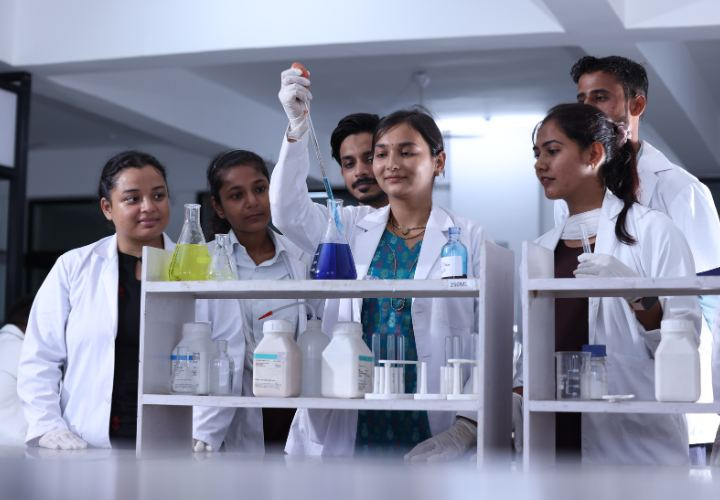
Choosing a career in healthcare does not always mean becoming a doctor or nurse. Modern hospitals depend on a large team of trained professionals who handle medical testing, diagnostic imaging, laboratory work, patient support and other specialised services. This is where paramedical professionals play an important role.
For students who have completed Class 12 with a science background and want to build a career in the healthcare sector, paramedical education can be an interesting option. Teerthanker Mahaveer University (TMU), Moradabad, offers a range of programmes in the paramedical field at different academic levels. The university’s current programme listing includes courses related to medical laboratory science, radiology and imaging, optometry and forensic science, along with postgraduate options.
What Makes Paramedical Courses a Good Career Option?
Healthcare is much more than diagnosis and treatment. Before a doctor can make an informed decision, different medical tests, scans and reports may be required. Paramedical professionals are often involved in these essential steps.
Depending on the course, students can learn about laboratory procedures, diagnostic imaging, optical care, forensic techniques and other healthcare-related skills. This makes paramedical education suitable for students who are interested in science and healthcare but want to explore a specialised career path.
Another advantage is the variety of roles available after completing the right qualification. Graduates can explore opportunities in hospitals, diagnostic centres, laboratories, clinics, research organisations and other healthcare settings.
Paramedical Courses Available at TMU
TMU offers several programmes through its College of Paramedical Sciences. The current programme list includes undergraduate, postgraduate and diploma-level options.
Some of the major programmes include:
- Bachelor of Medical Radiology and Imaging Technology (BMRIT)
- Bachelor of Medical Laboratory Science (BMLS)
- Bachelor of Optometry
- BSc in Forensic Science
- Master of Medical Radiology and Imaging Technology (MMRIT)
- Master of Medical Laboratory Science (MMLS)
- Master of Optometry
- MSc in Forensic Science
- Diploma in OT Technician
- Diploma in Laboratory Technician
- Diploma in Dialysis Technology
- Diploma in Anaesthesia and Critical Care Technician
The exact programme structure, duration and eligibility can vary from one course to another, so students should always check the latest university guidelines before applying.
Eligibility for Paramedical Courses at TMU
Eligibility depends on the programme selected.
For several undergraduate paramedical programmes, students generally need to complete Class 12 with the required science subjects. TMU’s published information for paramedical programmes mentions requirements involving subjects such as physics, chemistry, biology/mathematics and English, depending on the specific course.
For postgraduate programmes, students generally need a relevant bachelor’s degree along with the required academic qualifications.
This is important because there is no single eligibility rule for every paramedical course. A student interested in BMRIT, BMLS, optometry or forensic science should check the eligibility requirements of that particular programme before submitting an application.
Admission Process at TMU
The admission process is designed to allow students to register for their preferred programme and proceed with the application after providing the required details.
TMU’s admission portal currently displays an option to apply for admission 2026-27. Students are asked to provide basic information such as their name, email address and mobile number, followed by OTP verification and other required details.
A simple approach for students is:
- Select the paramedical programme you are interested in.
- Check the latest eligibility requirements.
- Visit the official TMU admission portal.
- Register using your basic details.
- Complete the required verification and application details.
- Submit the application as instructed by the university.
- Keep the relevant documents ready for the next stage of admission.
Students should avoid relying on old admission information because eligibility, programme availability and admission requirements can change from one academic session to another.
Why Practical Learning Matters in Paramedical Education
One of the biggest differences between studying a healthcare-related subject and studying a purely theoretical subject is the importance of practical exposure.
A paramedical student needs to understand how knowledge is applied in real situations. Laboratory procedures, diagnostic equipment, imaging techniques and patient-related processes require proper practical understanding.
TMU highlights facilities and healthcare-related infrastructure as part of its academic environment. The university’s admission website also highlights a hospital and other campus facilities as part of the student experience.
For students, this kind of environment can help connect classroom learning with the practical side of healthcare.
Career Opportunities After Paramedical Courses
After completing a suitable paramedical qualification, students can explore different career directions depending on their specialisation.
For example, students from medical laboratory-related programmes may look at roles in diagnostic laboratories and hospital laboratories. Radiology and imaging graduates can explore opportunities related to diagnostic imaging services. Optometry graduates can work in eye-care settings, while students with forensic science qualifications can explore opportunities connected with forensic laboratories and related organisations.
Career progression depends on the student’s qualification, practical skills, experience and the specific area of specialisation.
For students planning higher education, postgraduate programmes can also provide an opportunity to develop deeper knowledge in a chosen field.
Who Should Consider a Paramedical Course?
Paramedical education can be worth considering if you:
- Have a science background and an interest in healthcare.
- Enjoy practical and technical work.
- Want to specialise in a particular healthcare area.
- Are interested in laboratory, imaging, optical or forensic sciences.
- Want to explore healthcare careers beyond conventional medical courses.
The right course ultimately depends on your interests. A student who enjoys working with diagnostic technology may find radiology and imaging more suitable, while someone interested in laboratory procedures may prefer medical laboratory science.
Final Thoughts
A career in healthcare can take many different forms. Paramedical professionals are an important part of the healthcare ecosystem, and specialised education can help students develop the knowledge and practical skills required for this sector.
With programmes covering areas such as medical laboratory science, radiology and imaging, optometry and forensic science, TMU provides students with multiple pathways to explore paramedical education.
If you are planning paramedical courses at TMU for the 2026-27 session, start by choosing the specialisation that matches your interests, carefully check the latest eligibility criteria and then complete the admission process through the official university portal.
The most important thing is not simply choosing a course because it is popular. Choose a programme that matches your interests, strengths and long-term career plans. That decision can make your college journey more meaningful and help you build a focused career in the healthcare sector.
Book your Free consultancy: 9350777177 / https://reliablestudy.com/
– Content Writer and SEO – Riya Singh
All right reserved – Reliable Study / https://reliablestudy.com/
FAQs
TMU offers programmes in areas such as medical laboratory science, radiology and imaging, optometry and forensic science, along with diploma and postgraduate programmes.
Yes, several undergraduate and diploma-level paramedical programmes are available for students who meet the required Class 12 eligibility criteria.
Yes. TMU lists postgraduate programmes such as MMRIT, MMLS, Master of Optometry and MSc in Forensic Science.
Depending on the specialisation, graduates can explore opportunities in hospitals, diagnostic centres, laboratories, clinics, healthcare organisations and other relevant sectors.
Students can register through the official TMU admission portal and complete the required application and verification steps.