
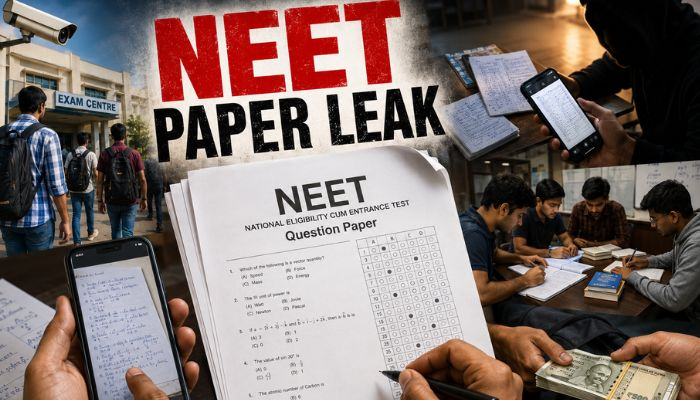
For lakhs of medical aspirants across India, NEET is more than just an entrance exam—it is the gateway to their dream of becoming a doctor. However, recent controversies surrounding alleged paper leaks have shaken the confidence of students and parents alike. As concerns over exam security continue, the central government has informed the Supreme Court that a computer-based test (CBT) format for NEET is under active consideration.
Although no final decision has been announced, the government has indicated that several major reforms are being evaluated to make the examination process more transparent, secure, and reliable. These changes are expected to be implemented only after recommendations from the High-Level Task Force, consultations with stakeholders, and adequate preparation time for students.
This development has sparked widespread discussion among NEET aspirants, coaching institutes, parents, and education experts. Here’s everything you need to know.
Why Are NEET Reforms Being Considered?
The demand for stronger security measures intensified after the alleged NEET paper leak controversy. The incident raised serious questions about the integrity of one of India’s largest entrance examinations.
To restore public confidence, the government has started reviewing the entire examination system instead of introducing temporary fixes. The focus is on building a long-term solution that minimises the possibility of paper leaks and ensures equal opportunities for every candidate.
What Did the Centre Tell the Supreme Court?
During the hearing before the Supreme Court, the centre clarified that switching NEET to a computer-based test is still under consideration.
The government stated that:
- No final decision has been taken yet.
- Recommendations of the High-Level Task Force will be examined first.
- Stakeholders, including experts and education authorities, will be consulted.
- Students will receive sufficient notice before any major change is implemented.
This means aspirants should not assume that the next NEET examination will definitely be computer-based. The proposal is currently being evaluated carefully.
What Could the New NEET Exam Pattern Look Like?
According to the government’s submission, authorities are studying multiple models, including a system similar to the Joint Entrance Examination (JEE).
Possible features may include:
Computer-Based Examination
Instead of using pen and paper, candidates may answer questions on computers at designated examination centres.
Two-Stage Examination
Officials are also examining whether a two-stage examination process would improve fairness and reduce risks associated with a single examination day.
Better Digital Monitoring
Technology can help monitor examination activities more effectively through secure servers, digital authentication, and real-time surveillance.
These proposals are still under discussion and are yet to receive final approval.
How Can a Computer-Based Test Improve Security?
One of the biggest advantages of a CBT system is stronger control over question paper distribution.
Potential benefits include:
- Reduced chances of physical paper leaks.
- Better encryption of question papers.
- Secure digital transmission.
- Improved monitoring at examination centres.
- Faster identification of irregularities.
- Reduced dependence on printed papers.
Many national-level competitive examinations already use computer-based testing successfully, which is one reason policymakers are evaluating this option for NEET as well.
Will Students Need to Worry About the New Pattern?
A change in examination mode naturally creates anxiety among students. However, the government has clearly stated that any transition will happen only after careful planning.
Students are expected to receive:
- Adequate preparation time.
- Official practice guidelines.
- Mock tests.
- Public announcements well before implementation.
Therefore, aspirants should avoid relying on rumours and instead follow official notifications released by the concerned authorities.
What Other Security Measures Are Being Planned?
The Centre has informed the Court that multiple security improvements are being reviewed.
Some important areas include:
- Stronger verification of examination centres.
- Better monitoring during question paper handling.
- Improved coordination among agencies.
- Enhanced digital security systems.
- More transparent examination procedures.
- Comprehensive review of examination logistics.
Why Is Technology Becoming Important in Entrance Exams?
With millions of candidates appearing for competitive examinations every year, maintaining fairness has become increasingly challenging.
Technology offers several advantages:
- Better transparency.
- Reduced human intervention.
- Improved data security.
- Faster result processing.
- Better candidate authentication.
- Easier monitoring across multiple examination centres.
Countries across the world have already adopted technology-driven testing systems for large-scale examinations, making digital assessment an increasingly practical solution.
Should NEET Aspirants Start Preparing for CBT?
At present, there is no official confirmation that the next NEET examination will definitely be conducted in computer-based mode.
However, students can gradually become comfortable with digital testing by:
- Practising online mock tests.
- Improving computer navigation skills.
- Managing time on screen.
- Reading questions carefully in digital format.
- Staying updated through official announcements.
These habits can prove useful regardless of whether NEET eventually shifts to CBT.
What Happens Next?
The government has made it clear that several important steps remain before any decision is finalized.
The roadmap includes:
- Reviewing recommendations of the High-Level Task Force.
- Consulting experts and stakeholders.
- Assessing technological readiness.
- Informing students in advance.
- Implementing reforms only after proper preparation.
Until then, NEET aspirants should continue preparing according to the currently notified syllabus and examination pattern.
Final Thoughts
The recent discussion around computer-based NEET reflects a broader effort to strengthen the credibility of India’s medical entrance examination system. While the alleged paper leak controversy raised serious concerns, it has also accelerated conversations about modernising examination infrastructure.
A transition to a computer-based format could improve transparency, enhance security, and reduce opportunities for malpractice. However, authorities have emphasized that no immediate change has been finalized, and any reform will be introduced only after extensive consultation and preparation.
For students, the best strategy is to stay focused on preparation while keeping track of official updates. Regardless of the examination mode, strong conceptual understanding, consistent practice, and time management will remain the keys to success.
Book your Free consultancy: 9350777177 / https://reliablestudy.com/
– Content Writer and SEO – Riya Singh
All right reserved – Reliable Study / https://reliablestudy.com/
FAQs
No. The Centre has informed the Supreme Court that the proposal is under consideration, but no final decision has been taken yet.
The proposal aims to improve exam security, reduce the risk of paper leaks, and enhance transparency.
A two-stage model similar to JEE is one of the options being examined, but nothing has been finalized.
Yes. The government has stated that adequate notice will be provided before implementing any major change.
Yes. Practising computer-based mock tests can improve familiarity with digital examinations and may be beneficial if CBT is introduced in the future.