
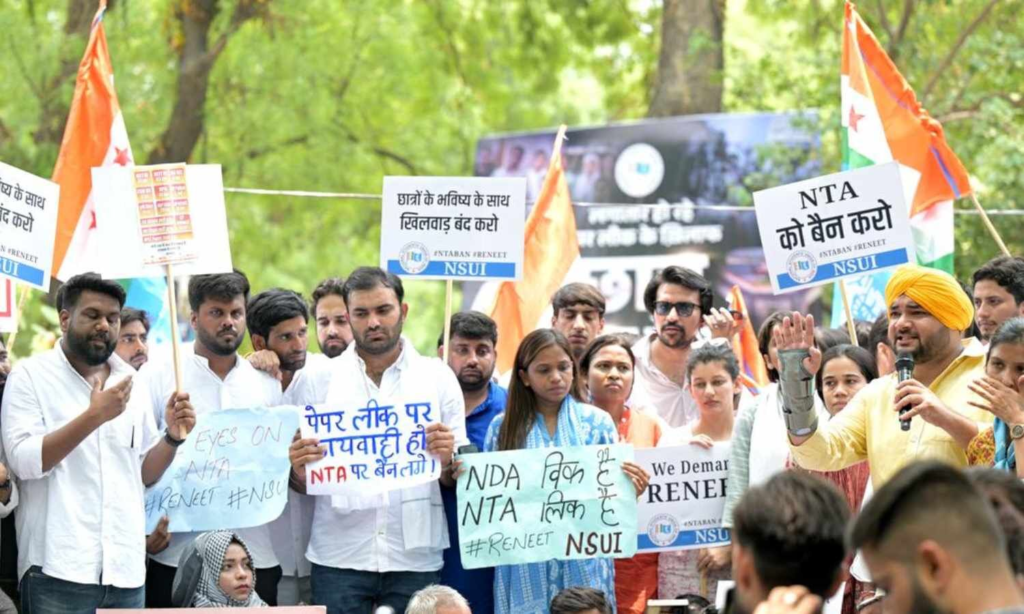
The NEET UG 2026 controversy continues to spark discussions across the country, and one of its most visible expressions has been the ongoing protest at Jantar Mantar in New Delhi. What began as a demonstration demanding accountability for alleged examination irregularities has gradually evolved into a larger community movement involving students, activists, professionals, and concerned citizens. Reports from the protest site suggest that the gathering is no longer just about raising slogans—it has become a space where people come together to discuss education reforms, support one another, and demand greater transparency in the examination system.
The protest has attracted national attention, particularly after environmentalist and education advocate Sonam Wangchuk joined the movement and began an indefinite hunger strike in support of demands related to examination accountability. His participation significantly increased public interest and brought greater visibility to concerns surrounding competitive examinations in India.
How the Protest Began
The movement emerged amid growing concerns about alleged irregularities in competitive examinations, including NEET UG. Protest organisers and student groups argued that repeated controversies surrounding entrance exams have affected the confidence of lakhs of students preparing for highly competitive careers.
The demonstration at Jantar Mantar began in June 2026 and focused on demands for accountability, transparency, and reforms within the examination system. Over time, the protest attracted support from students, teachers, civil society organisations, and youth groups who believed that education reforms should become a national priority.
From Protest Site to Community Hub
One of the most remarkable aspects of the movement has been the transformation of the protest venue itself. According to reports, Jantar Mantar has evolved into a community space where visitors gather not only to express solidarity but also to participate in discussions about education, governance, and student welfare.
Several student organisations established activity centres around the protest site. Volunteers organised reading spaces, distributed educational material, and encouraged conversations about the future of India’s education system. People from different backgrounds visited the site to understand the concerns being raised and contribute in whatever way they could.
The atmosphere reflected a collective effort rather than a traditional political demonstration. Community kitchens, volunteer groups, and cultural activities helped create a sense of unity among participants. Many visitors described the protest site as a place where ordinary citizens could openly discuss challenges faced by students and young professionals.
The Role of Sonam Wangchuk
The participation of Sonam Wangchuk became a major turning point in the movement. Known for his work in education and sustainable development, Wangchuk joined the protest and launched an indefinite hunger strike to support demands related to examination accountability and broader educational concerns.
His involvement drew attention from across the country and encouraged more people to visit the protest site. As days passed, concerns about his health grew, with reports indicating significant weight loss and declining health indicators during the fast. Supporters viewed his participation as a symbolic effort to highlight the seriousness of issues affecting students and educational institutions.
Growing Support From Different Sections of Society
What makes the Jantar Mantar protest unique is the diversity of people participating in it. Students preparing for competitive examinations remain at the centre of the movement, but support has expanded far beyond student communities.
Reports indicate that professionals, NGO workers, teachers, social activists, and citizens from different age groups have joined the gatherings. Some visitors bring food, water, books, and essential supplies for volunteers and protesters. Others participate in discussions, cultural programmes, or awareness campaigns focused on education reforms.
Online discussions have also reflected growing public interest. Social media users and community forums have highlighted concerns about examination transparency, the health of hunger-strike participants, and the broader demand for accountability in the education system.
Why Students Are Concerned
For many students, competitive examinations represent years of hard work, financial investment, and personal sacrifice. Any controversy related to examination conduct, evaluation, or administration can create uncertainty about their future.
Students participating in the protest argue that transparent and trustworthy examination systems are essential for maintaining confidence in higher education admissions. They believe that reforms should focus on ensuring fairness, preventing irregularities, and strengthening institutional accountability.
The protest has therefore become a platform where students can voice their concerns and call for stronger safeguards in national-level examinations.
Challenges Faced by the Movement
Despite growing support, the movement has faced several challenges. Protesters have reported concerns related to logistics, prolonged demonstrations, and the health of participants engaged in hunger strikes. Reports suggest that some protesters required medical attention as the demonstration continued over several days.
Organisers have also emphasised the importance of maintaining peaceful and democratic methods of protest. Volunteers have reportedly managed food distribution, cleanliness drives, and support systems to ensure the smooth functioning of activities at the venue.
The Bigger Conversation About Education Reform
Beyond the immediate demands related to NEET UG, the protest has sparked a larger conversation about the future of education in India.
Many participants argue that reforms should focus on the following:
- Improving examination transparency
- Strengthening accountability mechanisms
- Enhancing student support systems
- Preventing paper leaks and irregularities
- Increasing public trust in examination bodies
These discussions reflect broader concerns about educational governance and the need to create systems that prioritise fairness and merit.
Conclusion
The ongoing NEET UG protest at Jantar Mantar represents more than a demonstration against alleged examination irregularities. It has evolved into a community-driven movement where students, activists, professionals, and ordinary citizens are coming together to discuss the future of education in India.
From volunteer-run libraries and community kitchens to public discussions on accountability and reform, the protest has created a unique space for civic engagement. Whether or not its demands are fully met, the movement has already succeeded in drawing national attention to concerns surrounding examination transparency and educational accountability.
As conversations around education reform continue, the events at Jantar Mantar serve as a reminder that students across the country expect not only opportunities but also systems they can trust.
Book your Free consultancy: 9350777177 / https://reliablestudy.com/
– Content Writer and SEO – Riya Singh
All right reserved – Reliable Study / https://reliablestudy.com/
FAQs
Students are demanding greater transparency, accountability, and reforms in the examination system.
Sonam Wangchuk joined the movement and began an indefinite hunger strike in support of the protest’s demands.
The protest has evolved into a community space featuring discussions, volunteer activities, reading corners, and public engagement initiatives.
Yes, students, professionals, activists, teachers, and citizens from different backgrounds have participated or expressed support.
The movement focuses on examination transparency, accountability, and reforms to strengthen trust in the education system.