
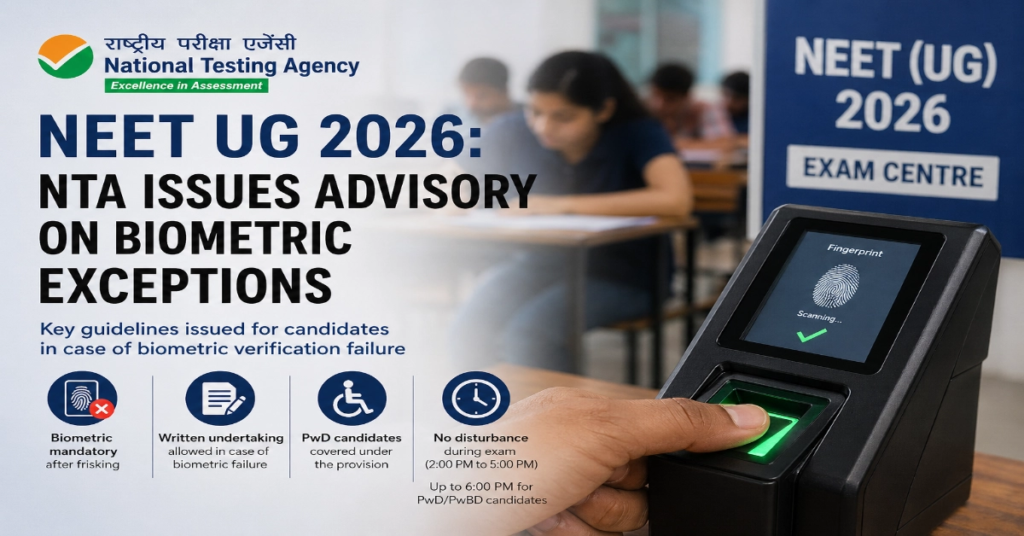
As NEET UG 2026 approaches, students across India are not just worried about revision and mock tests — a new concern has taken over: biometric verification at exam centres.
Every year, NEET is known for its strict security system, but recent updates and past incidents have made students and parents anxious about what might happen if biometric authentication fails at the exam centre.
Let’s understand the situation in a simple and clear way.
🔍 Why Biometric Verification is Important in NEET
Biometric verification is used by the National Testing Agency (NTA) to ensure that the right candidate is appearing for the exam. This helps prevent cheating, impersonation, and fraud.
At the exam centre, students usually go through:
- Fingerprint scanning
- Photo verification
- ID check (Admit card + Aadhaar)
From 2026 onwards, NTA is also planning to strengthen the system with advanced facial biometric verification for major exams like NEET and JEE.
⚠️ Why Students Are Worried This Year
Even though the system is designed for security, many students are anxious because of previous technical issues and last-minute problems.
Some common concerns include:
📌 1. Fingerprint mismatch
Sometimes fingerprints don’t match due to:
- Dry skin
- Injuries
- Poor scanner quality
- UIDAI database issues
📌 2. Server or device failure
There have been cases where biometric devices stopped working at exam centres.
📌 3. Delays at entry gate
Long queues for biometric verification sometimes reduce the time students get before the exam.
📌 4. Fear of being marked absent
Some students worry that even if they are present, system errors may create confusion.
🧠 What NTA Says About Biometric Problems
NTA has clarified that biometric verification issues can happen due to technical reasons and students will not be disqualified because of system errors.
According to official updates:
- Alternative verification methods may be used
- Manual identity checks are allowed if biometric fails
- Students will still be permitted to appear after verification
This means if fingerprint scanning doesn’t work, invigilators can verify identity using:
- Admit card
- Photo ID
- Manual attendance sheets
🏫 What Happens at the Exam Centre
On exam day, the process usually looks like this:
Step 1: Entry & security check
Students enter after showing admit card and ID proof.
Step 2: Biometric scanning
Fingerprint or facial recognition is done.
Step 3: Seat allocation
Students are guided to their assigned room.
Step 4: Final verification
Attendance and documents are cross-checked.
👉 This process is repeated multiple times in some centres to avoid errors, which sometimes causes delays.
📊 Past Issues That Raised Concerns
In previous NEET exams, some challenges were reported:
- Missing or malfunctioning CCTV cameras in centres
- Delays due to biometric verification errors
- Students temporarily marked absent due to system mismatch issues
- Long queues causing time pressure
These incidents created doubt among students about whether systems are fully reliable.
🧾 What Happens If Biometric Fails?
This is the biggest fear among students.
If biometric verification fails:
✔️ Step 1: Manual verification is done
Invigilators check ID proof and admit card.
✔️ Step 2: Alternative verification
Photo matching or signature check may be used.
✔️ Step 3: Special form filling
In some cases, students may be asked to fill a verification form.
👉 Important point: Students are generally not denied entry permanently due to biometric issues.
🧠 New Updates for NEET 2026
NTA is also improving the system to reduce such issues:
- Better biometric devices at centres
- Aadhaar-linked verification improvements
- Possible facial recognition integration
- Faster check-in process
These upgrades aim to reduce errors and improve exam-day experience.
💡 What Students Should Do Before Exam Day
To avoid last-minute problems, students should:
📌 1. Update Aadhaar biometrics
Make sure fingerprints and details are updated.
📌 2. Carry correct documents
- Admit card
- Valid photo ID (Aadhaar preferred)
- Passport-size photo
📌 3. Reach early
Arriving 1–2 hours before reporting time reduces stress.
📌 4. Keep calm during verification
Even if delays happen, don’t panic — systems are designed to handle it.
📌 Reality Check for Students
Let’s be honest — NEET is already a high-pressure exam. Adding biometric fear only increases anxiety unnecessarily.
But the truth is:
👉 Biometric systems are there for security, not to stop students
👉 Even if issues happen, backup verification is always available
👉 NTA has improved guidelines every year to handle such situations
So instead of worrying, focus on preparation.
🚀 Final Thoughts
Biometric verification is an important part of NEET’s security system, but it should not become a reason for fear.
Yes, technical glitches and delays can happen, but systems are in place to ensure that no genuine student is denied the exam.
As NEET UG 2026 approaches, the best strategy is simple:
- Stay updated with guidelines
- Keep documents ready
- Reach exam centre early
- And most importantly, stay focused on your preparation
Because at the end of the day, your preparation matters more than any technical process at the gate.
Book your Free Consultancy :- 9350777177 / https://reliablestudy.com/
–Content Writer and SEO – Riya Singh
All right reserved – Reliable Study / https://reliablestudy.com/